 This week, in his MOMLOGIC column, The Gay Uncle talks shit about that nice mommy, who pulled her child around a phone store on a leash. Though she was later arrested for child abuse, he still things that maybe this should become a new Olympic sport! Check it out.
Ask, and Ye Shall Receive
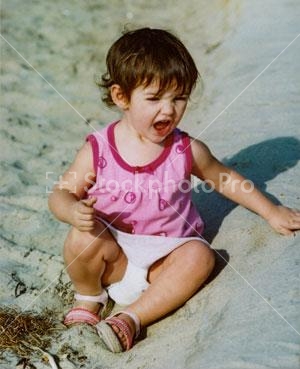 The Gay Uncle just returned from a trip to the beach with his friend Danika, and her two daughters Erica, 9 and Anna, 6. Perhaps Gunc is losing his edge, or maybe the kids (and parents) have just mellowed with age, but he didn’t bear witness to any major problems. This was sort of disappointing to him, since he lives for conflict. What he did discover was one niggling and ongoing issue: tone. He’s not one of those people who wants kids to beg for everything with pandering and complimentary language, calling adults ma’am and sir, or formally saying please and thank you very much when asking for the mustard. And he certainly understands that kids live in the present tense and the immediate, and when they have a desire, they feel the urge to act on it. He even gets that children are, by their very nature, excitable and egocentric. But this doesn’t mean they can’t be asked to break out of these habits, especially once they hit the second half of their first decade, and be expected to learn NOT to whine and repeatedly demand their every whim be catered to as soon as the thought enters their head, and issue invectives like “Give me that shovel!” or “Put me in my floaty toy!” or “Make me a grilled cheese!” to anyone, adult or child alike.
Of course, like everything with young kids, this isn’t accomplished by screaming and acting like the world is on fire whenever they transgress. This kind of extreme (and exciting) reaction only tends to reinforce the behavior. It is more productively accomplished by simply stating why this is perhaps not the best means to convince someone to do your bidding, providing another option, or just reminding the child that it is not possible for you to do what they want right that moment because you are engaged in something else and that you’re happy to help once you’re done. If they persist, put the onus on them to figure it out. “What did I just say I was doing? That’s right, taking off my shoes. So, can I go in the water yet?” This not only pulls them out of their own need state, it forces them to analyze the world around them, and accustom themselves to the idea that others have needs too. This may seem obvious to you, but it isn’t to a kid. If all that doesn’t work, simply ignore them. There is little more satisfying than tuning out an annoying child.
The Good Ms. Padgett
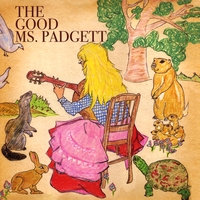 The Gay Uncle’s friend Anna Louise Ogden Padgett (her real name) is a preschool teacher, and a musician. She recorded and performed with her band the Naysayer for years. Then she had a kid. And like most people who have kids, her life collapsed around her in a shitstorm of breastfeeding, diapers, and, well…shit itself. But did that stop her? No. Not this smart and savvy Texas girl. What did she do? She did what every other musician with a kid does, she recorded an album of kids’ music! If it can work to revive the careers of people like Rick Springfield and Ziggy Marley–and win a Grammy for too-clever-by-half indie daddies They Might Be Giants–there must be some magic in it. So Gunc gave The Good Ms. Padgett a listen.
Sadly, The G.U. doesn’t really know how to respond to children’s music. When he ran a preschool in Manhattan’s East Village, he never touched the stuff. There was an old record player in the classroom, and he would play albums he picked up for pennies at junk shops by his weekend place in the Catskills: Louis Prima, Tito Puente, Persuasive Percussion does Cha-Cha, Dionne Warwick sings Burt Bacharach, Gil Scott Heron. Or he’d make up songs with the kids while out walking around the neighborhood. More than one now-teenage former student has told him that they cannot wait for the walk signal without thinking of the Gay Uncle’s hit, “Across the Street”.
All that said, he thinks your kid might like Anna’s album. It’s funny. It has instructions for how to move along to it, which he knows children appreciate since they’re kind of dim and lack creativity. And, most importantly–for him, and for young kids–it has a scatological bent, featuring songs like “I’m a Little Girl with Doodoo in My Pants” and the Gay Uncle’s favorite, “Don’t Put Your Feet in Your Doodoo”. So what are you waiting for? Click here and listen and purchase.
Mombianism
 The Mombian threw the Gay Uncle some love this week for his takedown of TIME Magazine’s dumb kids & gender article. Throw her some back by paying her site a visit. She’s smart and funny, and a nice, curly-headed lesbian. Click here.
Happy Birthday, Stick Shift!
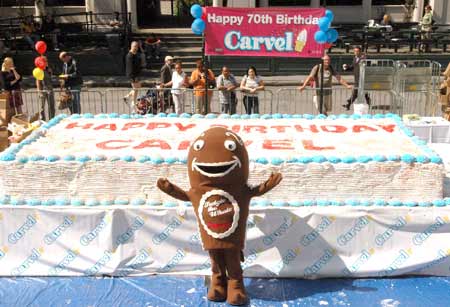 The Gay Uncle’s other regular column–Vanity Fair car blog Stick Shift–turns one today. So roll on over, say hi, and help them mow down the giant brown penis standing in front of their birthday cake. Don’t forget to make a wish!
Junk Food Loonie
 The Gay Uncle believes that kids should eat healthy, balanced meals. He believes that they should be physically active and allowed plenty of time for free play and exploration instead of being locked in the “safety” of their homes. When he ran his own preschool, he even went so far as to institute a no junk rule for kids’ lunches, which was enforced with patronizing notes to parents, and the removal of offending items–returned to the parents, along with the patronizing note, at day’s end. (It worked.) But he also believes that kids are entitled to a certain amount of junk, and need exposure to it in order to develop a healthy relationship with food. Think of it on the vaccine model. (For a very intelligent explanation as to why, check out his seminal article “In Praise of Junk”.) So you know what really burns him up? This lady, the appropriately named MeMe Roth, who has been on a rampage against birthday cupcakes in the tri-state area recently, to deleterious effect (for her, and her kids, mostly). He’s not proposing that some of her issues are without merit. (He hates Santa too.) Or even that there’s some sort of crisis in our food system. What he’s suggesting is that she fucking chill out before she gives herself a coronary.
Repeat after Gunc: cupcakes are not instruments of the devil. They’re a treat. And like everything that falls in that category–cookies, Flaming Hot Cheetos, The Real Housewives of New York–they’re best consumed occasionally, and in moderation. If we teach kids these skills, they learn them. If we wave our hands around and scream about them and write declarative and inflammatory emails in ALL CAPS, we alienate everyone and our message is not heard.
Gender Time
 This week, in his MOMLOGIC column, The Gay Uncle takes on Time magazine’s interpretation of a recent NIMH study on kids and gender. When it comes to this subject, nothing is ever as simple as it seems, even (especially) the teenage brain.
Divorce Proceeding
 The Gay Uncle recently received a question from a regular reader about the recently divorced parents of her niece. “As near as I can figure,”� the woman wrote, “my brother and his wife have never really told their daughter Megan that they”re splitting up: though she”s quite comfortable having two houses, and certainly recognizes that mommy lives in one and daddy in the other. Now, my ex-sister-in-law has a reasonably serious boyfriend, and with that comes a fair amount of makey-outy in front of Meg. Is this behavior problematic in the absence of any coherent explanation? I don’t think Meg is particularly traumatized””she doesn’t appear to be acting out””but after she spent the night with us recently, she asked “Why is Rick coming to brunch with mommy?”� Should we insert ourselves?”�
This is a good question. Gunc thinks that since Megan is 5 1/2 and seemingly intelligent, she indeed deserves an explanation. But since the parents haven”t provided it, it”s not exactly the aunt and uncle”s place (yet) to take on this responsibility. What the G.U. would suggest however is that they use the niece”s post-sleep over question to cue the brother and sister-in-law in to her need. Kids can adapt to almost anything without showing signs of trauma, but for their long-term mental health, they need to have big situations like this explained to them in an age-appropriate way that allows them to absorb, process, ask-questions, and receive answers. (Note that this, like most things with young kids, is not necessarily a linear process, meaning that it may take multiple efforts for it to make sense, and feel fully explained.) But the fact of Megan asking this question suggests that she wants more of an explanation of what”s going on than “mommy and daddy have different houses”�.
The Gay Uncle recommends that the reader tell her brother and sister-in-law about this, and suggest that they provide her with some further information about their situation. She can handle it if it’s delivered properly; she eventually won’t be able to if it isn’t. If, after the reader points this out, her siblings still don”t offer explanations, then Gunc thinks it’s safe to step in next time the girl asks, or even next time they see her. (The fact that she asked them about this indicates that she either may not feel comfortable asking it of her parents or has asked them about it already and gotten the brush off.) Dear reader can bring up her question and offer up answers. She may even want to think of examples of people in the niece”s life””either kids or adults””who have gone through divorce themselves. Concrete examples can really help make sense of these things for kids. Gunc also recommends these two books for concretizing this issue, and the providing ways to discuss it with young children.
Let’s Talk About: Divorce, Fred Rogers
Dinosaurs Divorce, Marc Brown
Shrieking Granny Justice II
 The Gay Uncle spent another lovely day in the company of in-laws today, hiking through some brushy woods down to a ice cold stream, where he and the other nine family members were feasted upon by an endless swarm of deerflies and horseflies for several hours. On the way home, fed up with being trapped in the car, and full from a roadside meal, he and his sister-in-law Lizzie and his youngest niece Daphne decided to get out walk down the 1/2 mile driveway leading up to their rental house. Being sporting, Lizzie challenged the seven year old to a race, which, about six bounds in, led to the girl doing a giant stomach-skidding, knee-and-elbow shredding, face-plant in the dusty gravel. Obviously, crying ensued, and the kid was rushed back into the car for the rest of the trip. “Daphne,” Gunc’s mother-in-law said sternly after traveling about ten feet with the weeping girl. “If you want to continue that crying, you are going to need to cry silently, without making any noise.” The Gay Uncle finds this instruction intriguing, as he believes that one of the core cathartic properties of crying comes from its howling/bawling aspect. But Episcopalians must think different. “Your crying is making me nervous,” grandmother Sarah explained, “and I can’t drive when I’m nervous.” What will Granny propose next? Mouthless chewing? Armless handstands? Wheelless bicycling? Your guess is as good as Guncs.
Parenting Tribunal
 Always wanted to tell other people how to raise their kids? Think your way is best? Simply have a big mouth? Well, here”s your chance to let the world hear your voice! Tribune newspapers parenting columnist (and good pal of the Gay Uncle) Heidi Stevens has started up a new parenting column””The Parent ”˜Hood””in which real moms and dads write in with questions, and real moms and dads give the answers. And they”re looking for folks to respond to a fresh new set of readers” problems. The issues are listed below. If you have a (brief) solution for any of these dilemmas, they want to hear from you. Simply e-mail your answers to parenthood@tribune.com And be sure to include your first and last name and your hometown, (as well as some mention of the question you”re responding to.) Join the conversation! Help others! Rule The Parent ”˜Hood!
Upcoming topics:
1. You’ve gotten in the bad habit of buying your child a “special treat” every time he/she behaves at Target. Now he/she expects a gift every time you enter a store. How do you break the cycle?
2. Your tween daughter came home from a friend”s house wearing heavy makeup. It looked atrocious and she seems too young. But she, of course, loves it. What do you do?
3. Your child”s pal gets everything she asks for (think multiple American Girl dolls) and your child wants to know why you won”t offer up the same. How do you handle?
4. Your son chews his nails incessantly. You’ve tried the nasty-medicine-on-his-fingers trick, rewards, punishments, ignoring the behavior. Nothing makes it stop. What should you do?
5. Meals have become less-than-nutritious endeavors at your house, with your kids demanding hot dogs and chicken fingers or nothing. How do you get them to stop the junk food gluttony?